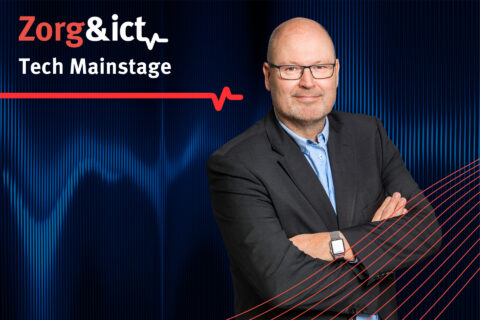
“Talking about data availability for years is all well and good, but you want to get results. So you just have to get started on data standardization.” That’s the view of Erik Bakker, department manager of the Data Expertise Center at Medisch Spectrum Twente. Together with the other Santeon hospitals, he has helped build the Health Intelligence Platform (HIPS). “The next step is the launch of FENIX, a blueprint for data availability in healthcare that actually works,” says Floortje Diephuis, HIPS product owner at Santeon. At Zorg & ICT, they’ll explain how it works.
About 15 years ago, Santeon started collecting data structurally, first manually and then automatically through HIPS and the Dataset Generator (DSG). Very quickly came an emphasis on unity of language, comprehensive governance and assurance in the local work processes of the seven Santeon hospitals, explains Floortje Diephuis. "That created trust. That way all seven hospitals knew: we are doing it right," Bakker said.
Zibs and sibs
The data belongs and remains with the hospitals themselves and thus the responsibility for the way of data collection. For the analyses and reports, the Santeon hospitals work together. Floortje Diephuis visualizes this 'fragmented data collection' in a striking image: each piece of information is in a different cupboard, drawer or bucket at each hospital.
"That's where Santeon Information Model needs to be able to talk with it to realize clear analyses. How we do that? To realize unity of language within the collaborating hospitals, we needed more than Nictiz's healthcare information building blocks (zibs). We extended those with Santeon Information Bowstones (sibs)."
To move toward a cohesive infrastructure with a wide range of possibilities and applications, Santeon has developed FENIX: FHIR Enabled Node for Information eXchange.
Push and pull
The data collection process wasn’t entirely fragmented: there was still an intermediate step. The seven collaborating hospitals jointly developed the Dataset Generator (DSG) technology. It is a modular push system that can convert data to multiple information standards. Santeon wanted to expand this to all hospital information systems and supplement it with a pull mechanism, so that healthcare professionals and researchers can retrieve data directly from the source. The non-anonymized data remains at the hospital; anonymized data is shared. FENIX now provides for this as well.
Accelerated Connectivity
The modular approach (“conceived once, applied seven times”), the emphasis on governance, and the advanced building blocks make FENIX a blueprint that need not be limited to within hospital walls, as Erik Bakker demonstrates. His slides feature an image of the entire world, but Bakker sees applications primarily in regional healthcare networks.
The timing is perfect for this. At the end of January, a new initiative in the Twente healthcare sector was launched: “Accelerated Connectivity.” Erik Bakker: “In this initiative, the two hospitals in the region are working closely with general practitioners, pharmacies, home care providers, mental health services, and elder care providers, among others, to achieve shared data availability. Similar to the Santeon system, this should make it possible to ask any healthcare organization: ‘What information do you have about this patient?’ Nictiz has received a grant to develop this, says Bakker. “But the question is whether we should wait for that. We’d rather get started on our own right away.”