Many healthcare organizations are running into the same problems. They are all looking for digital solutions. Paul de Kort, director of ICT Philadelphia, calls on them to work together more. "Let's see how we can use each other's knowledge to successfully deploy digital care," he says.
Scale makes a difference. With more than 600 locations, the Philadelphia Care Foundation is one of the largest organizations in the Netherlands providing care and support for people with intellectual disabilities. About 8,000 people work to provide care for the 11,000 clients and residents. The IT department alone has 100 full-time employees.
That scale has impact, says director of ICT Paul de Kort. "What we do is nothing special, because we run into the same problems as most other healthcare organizations in the Netherlands. We have to do the same work with less money and fewer people. That is why we are fully committed to providing as much care as possible with digital tools. We're pretty far along with that. When you're as big as we are, you have more capacity and people to innovate in e-health."
Accelerating Together
Because the challenges faced by healthcare organizations are so similar, De Kort advocates for prioritizing collaboration. “Why should every healthcare organization reinvent the wheel when we can accelerate progress together? Let’s see how we can leverage each other’s knowledge. That’s why I’m asking all healthcare institutions not to develop their own systems. Let’s make use of what we already have. To do that, I need colleagues and companies, but also market players who can make it easier to establish connections between systems.”
Information Security and Privacy Requirements
So far, that collaboration hasn’t really taken off, according to De Kort. That’s because everyone is dealing with transformations within their own organizations that demand a lot of time and energy. Information security and privacy requirements also make collaboration difficult. “That doesn’t foster collaboration, the sharing of data, or the exploration of AI applications. We see many opportunities, but we’re very cautious when it comes to our residents’ data.”
Video calls
Making it easier to link the various electronic client files (ECDs) would already be very helpful, De Kort believes. From Philadelphia, for example, DigiContact was developed, an application to assist clients with image calls and e-mail. "That is a solution that is also very applicable to others. We do run into challenges in practice in the area of interfacing with other ECDs. I really need the suppliers to solve this properly."
Nursing Triage
According to De Kort, if collaboration between healthcare institutions and IT providers can solve these kinds of problems, it will save a lot of money and “hassle.” “In the Zwolle-Drenthe region, IZA funding is being used to explore how nursing triage can be conducted for the entire sector via DigiContact. Nurses engage in remote conversations with residents’ caregivers. “It turns out that in more than 85 percent of cases, the nurse can provide advice remotely, which ultimately means the person doesn’t have to see a primary care physician.”
Comprehensive online services
De Kort has been with the Philadelphia Care Foundation for over two years. Prior to that, he primarily worked as an advisor and consultant, guiding other organizations. “Here, I get to do the work myself—that’s what makes it fun for me. The core of our 2025–2030 digital strategy is that, in five years, we’ll be able to offer our entire range of services online as a partner to people with intellectual disabilities.”
The rapid development of all kinds of digital tools offers plenty of opportunities for this. “We’re currently developing the tools that will allow us to be a 100 percent online partner in a few years. Thanks to AI, we can do a lot to support people without having to be physically present all the time.”
Social robots and chatbots
This can be done in a variety of ways. In addition to DigiContact, these could be social robots and chatbots, or a screen with an AI animation that can conduct conversations based on ECD information. "We are already testing all that, it's just a matter of scaling it up. We need the links between the different systems. That's where the biggest obstacles are right now. And to make it widely and robustly practical in a few years, we need suppliers, consultancies and partners."
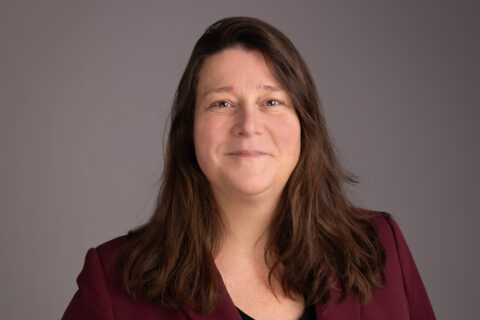
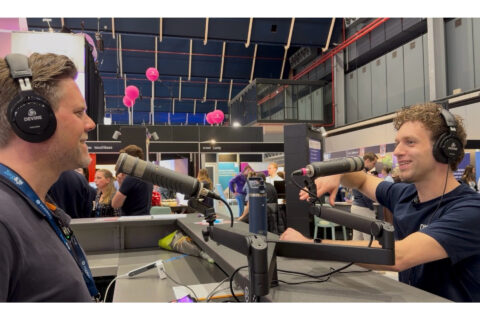
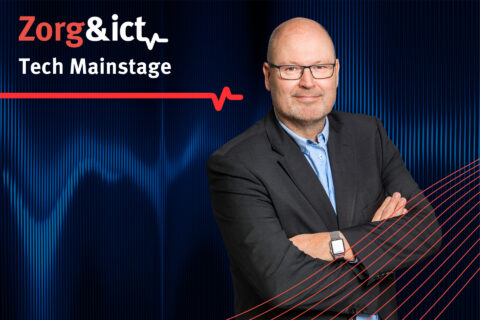
Paul de Kort, director ICT and digital transformation Philadelphia Care Foundation, was keynote at Care & ict 2025
This is an article by Dutch Health Hub. Want to keep up with all the news from the healthcare industry? Then take a look at the hub and sign up for the weekly newsletter.
↗