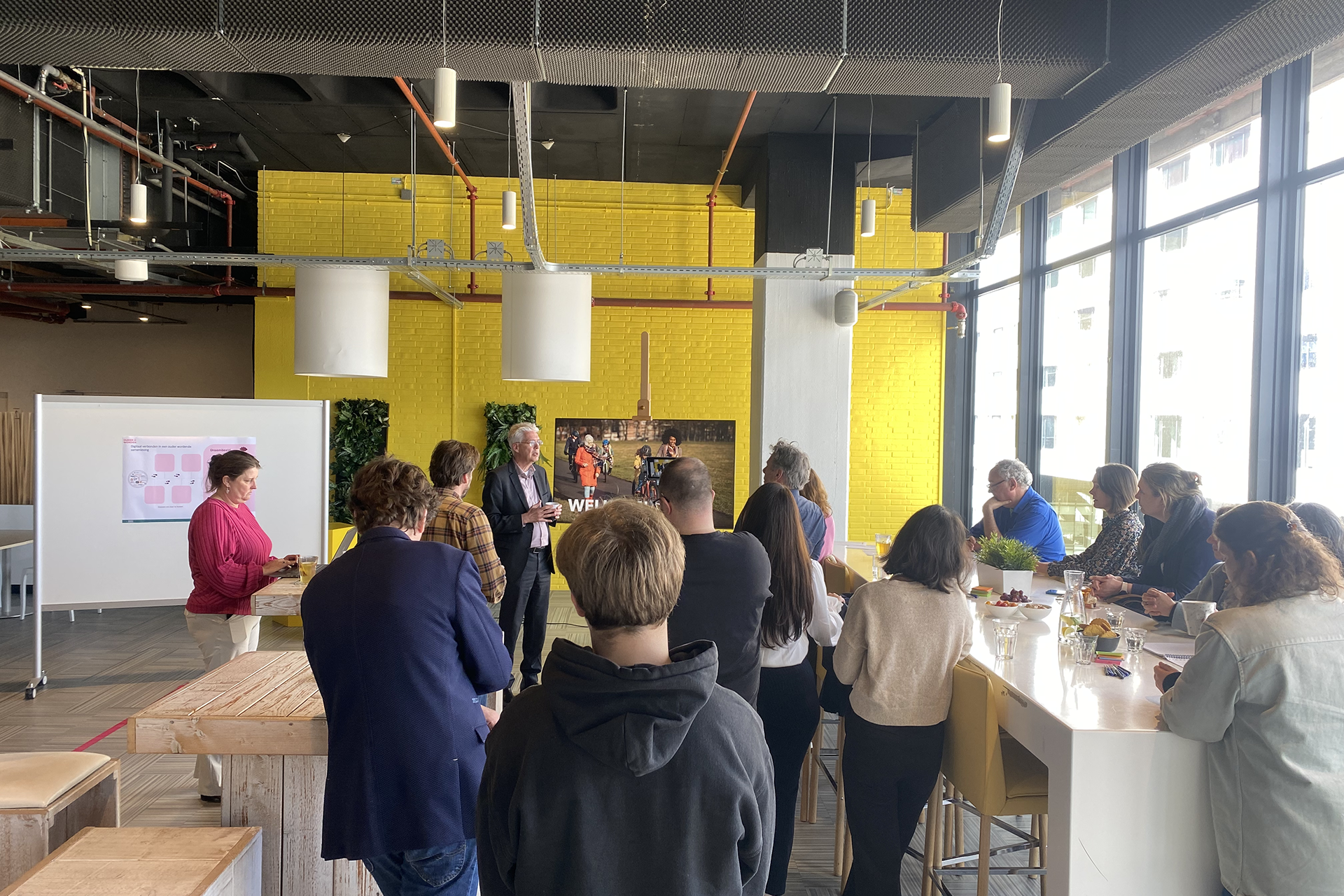
What needs to happen to ensure that everyone is "digitally fit" and stays that way? That was the central question raised by organizations at a meeting of Ouder Worden 2040 on March 31 in Utrecht. There were also solutions. These will soon have to be worked out with government and private parties.
We live in a society where doing banking or applying for utilities is becoming increasingly expensive and complicated. Internet access is required anyway, and sometimes multiple devices are needed to get into an organization. Not only do many elderly people struggle with this, but also people who are illiterate, have different migration backgrounds, visual or other disabilities, or struggle with poverty, for example. But those who design applications or applications do not always take this into account.
Digitally Connected
One of the inclusive solutions is “design for all.” This is different from “one size fits all,” as became clear on March 31. But who is responsible for this, and who looks out for people who are left behind digitally? And to what extent can they count on the government for this? These questions are particularly pressing right now.
April 10 is the Lower House debate on digital developments in healthcare. And on April 8, 9 and 10, Zorg & ict will take place at Jaarbeurs in Utrecht. There, on April 8, is a meeting of Ouder Worden 2040, focusing on the theme "From individual innovation to digitally connected. During that meeting, Ouder Worden 2040 will speak with patient and elderly associations, trade unions, health insurers, banks, pension funds, scientists, the government, NS and parties such as KPN Health.
At every level
On March 31, some solutions were already offered. Then Alliantie Digitaal Samenleven, Helpdesk Digitale Zorg, SeniorWeb, DigiVitaler, Oefenen.nl, DUIT, Vereniging van Openbare Bibliotheken, Digihandig, Welkom Online, SOM NL and Ouder Worden 2040 engaged in a discussion.
In this effort, government and private-sector entities at every level were called upon to act. It turned out that setting requirements in public tenders is one of the solutions. For example, it should be enshrined in law that entities allocate a minimum percentage of development costs to support services. At the local level, there should always be a council member responsible for digital inclusion. And one of the most important points: citizens must always be able to access government services, public transportation, or their bank through multiple channels.
Digital Journey
The approach to digital inclusion begins with mapping out the available resources and then keeping that information up to date. Citizens need a starting point for what can sometimes be a challenging digital journey—for example, through public libraries, which offer digital help desks that are already widely used.
The building blocks for the move toward digital inclusion are in place, as became clear during the “Aging 2040” meeting. The participating organizations have plenty of best practices to share with the world. Now, the main priority is to implement them as effectively and widely as possible.
Parenting 2040 is participating in Care & ict. On April 8, the meeting From individual innovation to digitally connected will take place. And in During this 1-hour guided tour, we’ll take you on a tour of five innovative technology exhibitors whose solutions can help make work more enjoyable and ease the workload. The guided tour takes place daily from 10:00 a.m. to 11:00 a.m. and from 2:00 p.m. to 3:00 p.m. Space is limited, so be sure to sign up in advance at the Ouder Worden 2040 booth (07.E086).

This is an article by Dutch Health Hub. Want to keep up with all the news from the healthcare industry? Then take a look at the hub and sign up for the weekly newsletter.
↗