Scaling up in health tech requires major investments. Should institutional investors such as pension funds act as lenders? Techleap Special Envoy Constantijn van Oranje isn’t immediately enthusiastic about the idea of them making direct investments. He does, however, support them investing more in venture capital funds.
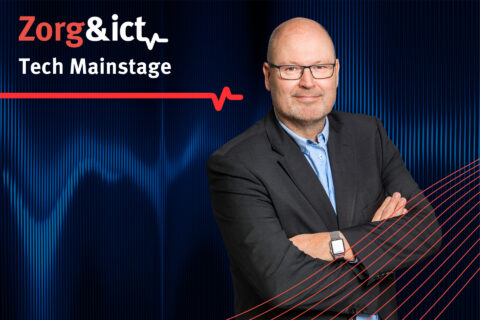
In his view, it is not money per se, but rather room for entrepreneurship combined with smart digital architecture that can give the sector the boost it needs. The challenges in healthcare lie not so much on the supply side of innovation, but in the healthcare sector’s willingness and capacity to adopt it. During the “Zorg & ICT” event on April 9, he will announce the winner of the tenth National Healthcare Innovation Award and share his vision on scaling up in health tech.
As a "growth accelerator" of start ups and scale ups, Techleap pokes the dipstick into the Dutch tech sector every year. The latest edition of The State of Dutch Tech reveals that Dutch growth companies raised 3.1 billion euros in investments last year. But that's not the whole story. The investments are coming to an increasingly smaller number of companies. Especially for early stage companies, it is increasingly difficult to get money. Growth from start ups to scale ups is also stalling.
Point solutions
Developments in the Dutch health tech sector align seamlessly with this trend. “We’re seeing a lot of startups that are having a hard time securing investment,” Constantijn notes. “That’s a pattern that has certainly been around for some time, especially in the health sector.”
According to Constantijn, part of this problem lies with the health tech startups and scale-ups themselves. All too often, they still think in terms of one-off solutions. “Many startups come up with a solution for a single problem. That might be a useful solution, but it doesn’t make for a business. Venture capital firms want you to have a business with growth potential. If you’re going to make hardware, you really need to think about where you’ll be in five or ten years. Will you have a robot that does one thing, or will you have a platform capable of doing many more things?”
Philanthropy
There’s also often insufficient thought given to the business model. “If you have a potentially amazing invention to eradicate a disease, but insurers won’t cover it and hospitals find it too complex to test, then a company isn’t the right vehicle. In that case, you need a different kind of funding and may have to turn to philanthropy. I often see things go wrong there. Startups need to understand that they really have to solve a problem—not for the patient, because the patient isn’t the one paying, but for healthcare providers or health insurers. A more efficient process, higher productivity, and fewer dropouts—these are the things that make an impact on the parties who pay.”
National Healthcare Innovation Award
Impact is also what Constantijn thinks the National Care Innovation Award is all about. On April 9, during Zorg & ict, he announced the winner of the tenth edition. "The Care Innovation Prize offers groundbreaking solutions a stage," said Constantijn. "The prize stimulates development of innovations that improve healthcare and make it more accessible for everyone. Hopefully healthcare will follow suit by becoming more accessible to the innovations offered by these entrepreneurs."
Flow of Subsidies
Startups may find it harder to secure private funding, but in the Netherlands, there’s still a massive subsidy carousel in full swing. Does this give startups some breathing room, or does this flow of subsidies encourage quick-fix solutions and a lack of business acumen? Constantijn: “I think it’s good that subsidy money is available in that early phase, because it’s often still very research-intensive. You have to jump through all sorts of hoops, like clinical trials. That takes a lot of time and money that a private investor isn’t willing to pay for. Building a team is also a risk. It often involves scientists, and they aren’t always the best entrepreneurs. So an investor isn’t likely to jump in there.”
“Public subsidies definitely have an important role to play there. But you need to identify patterns among companies that aren’t going to make it sooner. We need to take a closer look at an earlier stage to determine whether an idea is viable. That way, you prevent people and organizations from spending a long time working on an innovation that’s never going to succeed anyway. We shouldn’t pour public money into that and just hope it works out.”
Pension funds
A similar reservation applies, as far as Constantijn is concerned, to the suggestion to invest pension funds in health tech. Director Arjan van den Born of ROM Region Utrecht recently called for the creation of a 1 billion euro age tech fund, to be filled by pension funds.
No quick fixes
“Pension funds should focus on investing in sound investment opportunities, because this is pensioners’ money. They need to see a return on their investment. Pension funds’ money is meant to be invested, not to finance all kinds of services for the elderly. You have to keep those things separate. But if there are good investment opportunities, why shouldn’t a pension fund invest?”
“You have large funds where you can allocate a fair amount of money. That can be a win-win-win situation, because you’re investing in funds that invest in Dutch companies bringing new solutions to the table. But it’s a lose-lose-lose situation if you put pension money into proposals that aren’t actually investable and will never get off the ground. A pension fund shouldn’t be a cash cow from which you pull a billion without even indicating how many interesting companies there actually are.”
Learning from India
According to Constantijn, the Netherlands can learn from India on how to scale up successfully. There, Nandan Nilekani, CEO of the IT company Infosys, was commissioned by the government to build the world’s largest biometric identification system from the ground up in no time. “Aadhaar,” which in Hindi means “base” or “foundation,” provides 1.3 billion Indians with digital access to financial services via a unique 12-digit identification number. This service package has since expanded organically to include telecommunications, education, and healthcare.
A half-hearted compromise
“The European approach is based on harmonizing national initiatives and legislation,” says Constantijn. “The approach is always regulation. It takes a long time to negotiate that out, and you always end up with a mediocre compromise. What India demonstrates is how smart architecture can solve many of the problems we’re trying to address through regulation, such as interoperability, accessibility, governance, and public-private partnerships.”
“Someone in India told me:‘We shouldn’t be building solutions; we should be building infrastructure.’ Aadhaar was launched because the Indian government couldn’t get certain subsidies to the people who were entitled to them. They didn’t know who those people were. They didn’t have bank accounts. Now you can set that up in a few minutes, and more than a billion people have bank accounts.”
Once the Aadhaar platform was up and running, it quickly became clear that it could do more than just handle financial matters. “Once those issues surrounding unique identification had been resolved in a secure, privacy-friendly way, the idea arose to use it to unlock health data. Now they’re also building an energy layer on top of it. So, layer by layer, they’re building an entire digital infrastructure. There’s no reason at all why we couldn’t do that in Europe. But you do have to work together to make it happen.”
Retrofitting
According to Constantijn, the problem is that the European Union is currently devoting more energy to devising rules to link legacy systems that are often not interoperable. “We’re currently retrofitting systems instead of ensuring that all new data meets the same standards. If we combine an identity solution with an open electronic health record—where the data resides with the patient—we can build a European healthcare system from there.”
“What the Indians did well was ask someone who knows what he’s talking about. His team then built an open system designed to serve citizens and patients as effectively as possible. Anyone can use it, and anyone can offer services on it. It’s housed within a public-private foundation that isn’t politicized and doesn’t represent a compromise between existing interests. If you try to harmonize everything and give everyone a voice at the table, you’ll never get anywhere.”
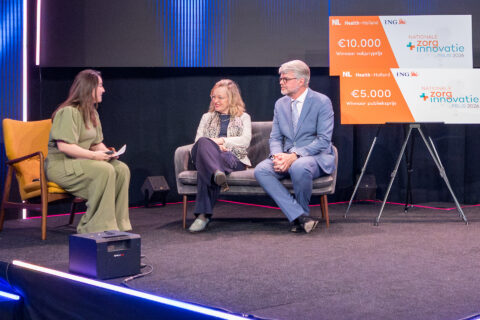
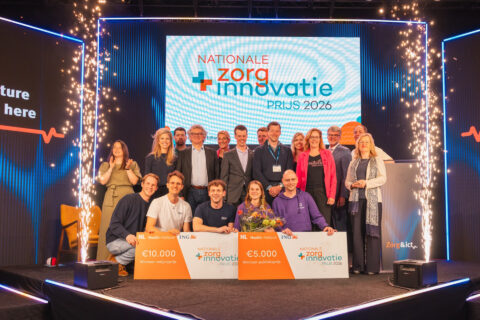
Constantijn van Oranje awarded the tenth National Care Innovation Prize on April 9 during Zorg & ict in Jaarbeurs Utrecht. During the ceremony, he and other experts discussed the future of Dutch health tech.
This is an article by Dutch Health Hub. Want to keep up with all the news from the healthcare industry? Then take a look at the hub and sign up for the weekly newsletter.
↗